



10-Minute Read
Concrete vs Steel Palisades: Which Is Better?
Contact Us
Classy Creations
Address: 5 Yster Street, Ladine, Polokwane, 0699
Tel: 015 293 2156
Cell / WhatsApp: 082 418 7578
VoIP: 015 495 0932
Email: sales@classycreations.co.za







The Full Guide: Everything to Check Before You Pay for a Precast Room
Want the complete comparison? Here's the full breakdown — feature by feature, property type by property type — plus answers to the questions we get asked most.
What Are Concrete Palisades?
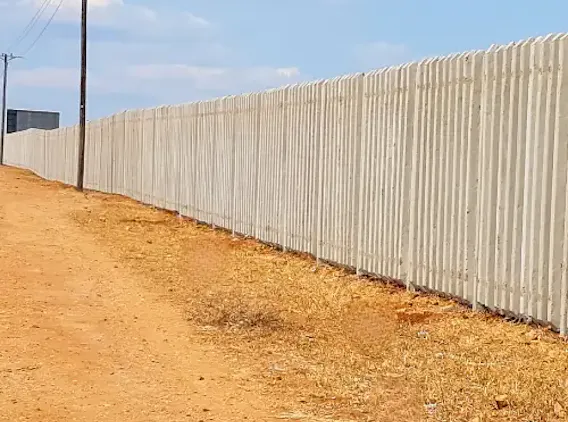
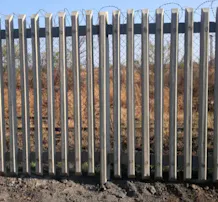
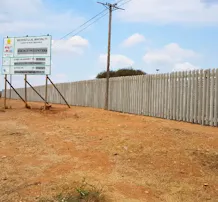
Concrete palisades are security fences made from precast concrete posts and vertical concrete pales. The design creates a strong, open-style fence that provides visibility while still forming a serious physical barrier. They're popular for homes, schools, churches, farms, factories, warehouses, municipal properties, commercial sites, industrial sites, government projects, grave yards, and developments.
Their main advantage is strong perimeter security with very little long-term maintenance. They don't rust, don't need regular repainting like steel, and aren't attractive to scrap metal thieves in the same way steel can be.
What Are Steel Palisades?
Steel palisades are security fences made from steel posts, rails, and vertical steel pales, widely used across South Africa around businesses, schools, warehouses, factories, and homes. They can look neat and strong when newly installed, especially when painted, powder-coated, or galvanised — but because steel is a metal product, corrosion protection and maintenance become important over time.
A properly galvanised steel palisade fence can last longer than ordinary painted steel, but usually at a higher cost. Standard steel palisades can require ongoing rust treatment, repainting, and repairs, especially in harsh weather or high-risk environments.
Quick Comparison
Pieter put up steel palisades around his farmhouse three years ago. They looked sharp on installation day — clean lines, freshly painted, exactly the look he wanted. Eighteen months later he was out there with a wire brush and a tin of paint, treating rust spots along the base rail. A year after that, two sections went missing overnight. Scrap steel has a resale price. His fence did too, just not to him.
None of that makes steel a bad choice. It just means the sticker price on installation day was never the full story.
If you're choosing between concrete and steel palisades, the real question isn't which looks better on day one — it's which one you'll still be happy with in five years.
The core difference: what happens over time
Both fence types do the same basic job — a strong, visible barrier you can see through, for homes, farms, schools, businesses, and industrial sites. Where they split apart is maintenance. Concrete palisades, once properly installed, don't rust and don't need repainting to stay protected. Steel needs a protective coating — galvanising, paint, or powder coating — and if that coating is damaged, poorly applied, or just wears down over the years, corrosion follows. A properly galvanised steel fence holds up better than a painted one, but it costs more upfront to get there.
Rust is the deciding factor for a lot of property owners
Concrete Palisades simply do not rust. That single fact removes an entire category of future problems — no rust stains, no flaking paint, no sanding and repainting down the line. For anyone who wants a fence that keeps doing its job without regular upkeep, that's usually the deciding point.
Theft is the one thing most people don't think about until it happens
Steel has scrap value. That makes it a target — particularly on quiet properties, farms, or sites without constant supervision. Concrete Palisades are heavy and carry no scrap value, so while they can still be damaged, they simply aren't worth stealing for resale. On rural or lightly supervised properties, that difference matters more than people expect.
Security and appearance: both hold up, differently
A well-installed steel fence looks genuinely sharp when freshly painted. Concrete palisades create the same open, see-through security barrier with a solid, permanent look — and they can be paired with pillars, gates, or razor wire. The difference isn't day-one appearance — both look good then. It's year-three appearance, once weather and time have had a say.
Don't compare on the first quote alone
The cheapest number on the page isn't always the cheapest fence over its lifetime. Installation cost is only one line item — site prep, gates, transport, and labour matter too, but so does what happens after: repainting, rust repairs, possible section replacement, and theft risk. Steel can look like the better deal upfront and cost more over five years once those factors are added in.
Which one fits your property
For homes, concrete palisades suit anyone who wants strong street-facing security without ongoing upkeep; steel still works well where a specific painted look matters more and regular maintenance is genuinely part of the plan. For businesses, factories, and industrial yards, concrete's durability and low scrap-theft appeal protect assets, stock, and staff without adding a maintenance schedule to the to-do list. For schools, churches, and public sites, concrete's combination of visibility and low maintenance suits years of outdoor exposure with minimal fuss. And for farms and larger rural properties the combination of theft risk and limited day-to-day supervision usually tips the decision firmly toward concrete.
Get the honest answer for your property
Classy Creations manufactures and installs concrete palisade fencing in Polokwane and surrounding areas, for homes, farms, schools, churches, businesses, and industrial sites. The right choice depends on your property, your budget, and how much ongoing maintenance you actually want to take on — the best way to know for sure is a proper site inspection and quote.
Message us on WhatsApp (082 418 7578) for a free quote. Tell us your property type, roughly how many metres of fencing you need, and your location, and we'll give you a straight answer on what fits best.

1. Maintenance: Concrete Palisades Usually Wins
Concrete palisades are designed to be low-maintenance. Once installed properly, they don't need regular painting to protect against rust and can handle sun, rain, and outdoor exposure without the same corrosion concerns as steel. Steel palisades need more attention over time — if not properly protected, rust can start forming, affecting both appearance and strength, and may require sanding, priming, repainting, or repair work to stay in good condition.
2. Rust: Concrete Palisades Have a Clear Advantage
Steel can be protected through galvanising, painting, powder coating, or other treatments, which can work well when done correctly — but if the coating is damaged, poorly applied, or neglected over time, corrosion becomes a problem. Concrete does not rust. That's a major advantage for property owners who want a strong perimeter fence without worrying about rust stains, flaking paint, corrosion damage, or constant maintenance.
3. Security: Both Are Strong, But Concrete Has Practical Benefits
Both concrete palisades and steel palisades create a strong visible security barrier. Steel palisades are difficult to climb when installed correctly and can be very intimidating; concrete palisades also provide a serious physical barrier and strong visual deterrent. The practical difference shows up over time — a steel fence that's rusting, bent, missing sections, or damaged by theft loses some of its security value, while a concrete palisade fence is less attractive to scrap thieves and doesn't suffer from rust in the same way. For many South African properties — especially farms, schools, municipal sites, and industrial yards — this makes concrete a very practical security choice.
4. Scrap Metal Theft: Concrete Is Less Attractive
Steel has resale value as scrap metal, which means steel fencing can become a target for theft, especially in quiet areas, vacant properties, farms, or sites with limited supervision. Concrete palisades don't carry the same scrap metal value — they can still be damaged, but they're generally far less attractive to thieves looking for metal to remove and sell. For properties where theft risk is a concern, concrete palisades are often the safer long-term option.
5. Appearance: Both Can Look Good
A well-installed steel palisade fence can look very neat, especially freshly painted or powder-coated. Concrete palisades also create a clean, strong, professional boundary, and work especially well for properties that need a secure but open look — unlike a solid wall, palisades allow visibility in and out, which can help with security monitoring. Concrete palisades can also be paired with other walling solutions, gates, pillars, and razor wire for a complete perimeter system.
6. Cost: Look Beyond the First Quote
Many people only compare the upfront price of concrete palisades vs steel palisades — that can be a mistake, since the cheapest quote isn't always the cheapest fence in the long run. When comparing, consider:
- Installation cost and product quality
- Site preparation, fence height, and total metres required
- Gate requirements, transport, and labour
- Long-term maintenance and repainting
- Rust repairs and theft risk
- Future replacement costs
Steel may sometimes appear attractive upfront depending on specification, but if it needs repainting, rust repairs, or section replacements later, the long-term cost can increase. Concrete palisades are often chosen because they offer strong security with lower long-term maintenance. The best way to compare properly is to request a site inspection and quotation based on your actual property.
7. Which Option Is Better for Homes?
For residential properties, concrete palisades are a strong option for security, visibility, and low maintenance — well suited to boundary fencing, street-facing security, side boundaries, large stands, and rental properties. Steel palisades can also work well for homes, especially when appearance is the main priority and the fence is properly maintained, but for homeowners who want less maintenance and no rust concerns, concrete is usually the more practical choice.
8. Which Option Is Better for Businesses and Industrial Sites?
For businesses, warehouses, factories, workshops, and yards, perimeter security is about protecting assets, vehicles, stock, equipment, and staff, not just appearance. Concrete palisades offer a visible security barrier, low maintenance, strong long-term durability, less scrap theft appeal, a professional boundary, and good visibility for security monitoring. Steel palisades may still suit sites where a specific steel look is required, but long-term maintenance needs to be taken seriously.
9. Which Option Is Better for Schools, Churches, and Public Properties?
Schools, churches, municipal properties, and public sites need fencing that's strong, neat, and practical. Concrete palisades are often well suited because they're durable, low-maintenance, and allow visibility important for supervision, access control, and general safety — the fence needs to handle years of outdoor exposure without becoming a constant maintenance problem, and that's where concrete is a serious option.
10. Which Option Is Better for Farms and Larger Properties?
Farms and larger properties often need boundary solutions that handle open conditions, long distances, limited supervision, and higher theft risk. Concrete palisades can be useful around farmhouses, lodges, workshops, storage yards, entrances, game farm facilities, staff accommodation, and high-value equipment areas. For large rural properties, steel theft and long-term maintenance can become expensive problems — concrete palisades reduce those concerns and create a strong, permanent security barrier where it matters most.
So, Which Is Better?
For most property owners who want a low-maintenance, rust-free, strong security fence, concrete palisades are usually the better long-term option. Steel palisades can still be a good choice when properly galvanised, coated, installed, and maintained. But if you want to reduce maintenance, avoid rust problems, and lower the risk of scrap metal theft, concrete palisades make a lot of sense. The best choice ultimately depends on your property, your budget, your security needs, and your long-term plans.
Choose Concrete Palisades If You Want:
- A strong security barrier
- A rust-free fencing solution
- Lower long-term maintenance
- A fence that's less attractive to scrap thieves
- Good visibility through the fence
- A neat and professional boundary
- A practical solution for South African conditions
- A local Polokwane manufacturer and installer
Choose Steel Palisades If You Want:
- A metal fence appearance
- A specific steel design
- A fence that can be painted in different colours
- A solution where regular maintenance is acceptable
- A galvanised steel option, if your budget allows for it
Need Help Choosing the Right Fence?
At Classy Creations, we manufacture and install concrete palisade fencing for homes, businesses, farms, schools, churches, industrial sites, and larger perimeter projects in Polokwane and surrounding areas. We can help you choose based on your property size, security concerns, budget, preferred look, site conditions, gate and access requirements, and long-term maintenance expectations.
Get a Concrete Palisade Quote in Polokwane and Limpopo
Message us on WhatsApp (082 418 7578) for a free quote. Whether you need fencing for a home, farm, school, business, factory, church, or government project, we can help you secure your boundary with a practical solution built for local conditions.
Frequently Asked Questions
Are concrete palisades better than steel palisades?
Concrete palisades are often better for property owners who want a rust-free, low-maintenance security fence. Steel palisades can also be strong, but usually require more maintenance over time, especially if not properly galvanised or protected.
Do concrete palisades rust?
No. Concrete palisades do not rust — this is one of their biggest advantages over steel palisade fencing.
Are steel palisades still a good option?
Yes, steel palisades can still be a good option when properly galvanised, coated, installed, and maintained. The main concern is that steel can rust if not protected properly.
Are concrete palisades good for security?
Yes. Concrete palisades create a strong visible barrier while still allowing visibility through the fence, suitable for homes, businesses, schools, farms, factories, churches, and public properties.
Are concrete palisades good for farms?
Yes. Concrete palisades can work very well around farmhouses, entrances, workshops, equipment areas, lodges, and other high-value zones on a farm.
Which is cheaper: concrete palisades or steel palisades?
Cost depends on the height, length, site conditions, material specification, transport, gates, labour, and installation requirements. The best way to compare properly is to request a quote based on your actual property.
Do concrete palisades need maintenance?
Concrete palisades require very little maintenance compared to steel — they don't need regular repainting to prevent rust.
Can Classy Creations install concrete palisades in Polokwane and surrounds?
Yes. Classy Creations manufactures and installs concrete palisades in Polokwane and Limpopo.
Classy Creations — One Stop Perimeter Walling, Precast Walling, and Concrete Palisade Shop.
